


A Different Operating System

Two Sundays ago, we listened to a Gospel reading that I have heard probably a hundred times before.
“The first will be last, and the last will be first.”
I have never really understood what that meant. I knew the words. I knew it was supposed to mean something about humility and the Kingdom of God, but if I am being honest, I had never really stopped and thought about what Jesus was actually asking us to understand through it.

Then our priest explained it in a way that finally made sense to me.
He talked about the way we operate as human beings. We are economical. We measure things, compare things and keep track of what we put in versus what we get out. If I work hard, I expect a result. If I put in more effort, I expect more in return. If I give something, a part of me naturally expects something back. We have been taught, in so many different ways, that effort should produce results and that the amount we receive should somehow correspond to the amount we give.
And honestly, that makes sense to us. It is how we understand the world.
Keeping Score
We keep track of grades, salaries, promotions, miles run, calories eaten, money saved and time spent. We compare where we are to where we thought we would be and where we are to where everyone else seems to be. We do this with our careers, our friendships, our relationships and sometimes even our faith.
There is a little calculator running in the background of our minds more often than we probably realize.
Did I do enough? Did they do enough? Did I give more? Am I getting what I deserve? Is this fair?
Then there is God.
God does not seem to operate according to the same system.
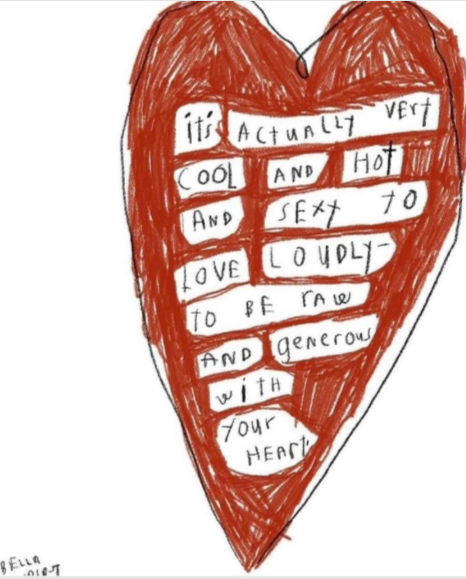
His operating system is love.
And suddenly, that Gospel made a little more sense.
“The first will be last, and the last will be first” makes very little sense if I am using my operating system. If I worked all day, why should someone who showed up at the end receive the same reward? If I have been doing everything right, why should someone who messed up get another chance? If I have given more, why shouldn't I get more back?
That is the part of God's love that I don't think we fully understand. It is not transactional. It is not a scoreboard. It is not a spreadsheet where every good thing we do earns us a corresponding amount of good in return.
And I think I have spent a lot of my life trying to make it one.
God's Math Is Different
I want things to make sense. I want to know that if I do the right thing, it will lead to the right outcome. I want to believe that if I love someone well, they will love me well. I want to believe that if I work hard enough, I will eventually get somewhere. I want to know that the sacrifices I make will be worth it.
There is nothing inherently wrong with wanting those things. But I started wondering what happens when I take that same way of thinking into my relationship with God and with other people.
What happens when I start keeping score?
I think we do it constantly, often without meaning to. We notice who texted first. Who apologized. Who made the effort. Who showed up. Who got the promotion. Who seems further ahead. Who gives more in a relationship. Who has sacrificed more.
We tell ourselves we are simply noticing what is happening, but sometimes we are really keeping a running tally of what we have given and what we believe we are owed in return.
And that is where this idea of God's economy really started to get to me.
Because love does not always make economic sense.
Forgiveness is not particularly efficient. Neither is giving someone another chance when they have already disappointed you. It is not efficient to sit with someone who needs you when you have a hundred other things you could be doing. It is not efficient to give your time to someone who cannot give anything back. It is not particularly efficient to celebrate someone else's success when part of you wishes it were yours.
But Christ keeps asking us to do these things.
He asks us to love people who cannot repay us. He asks us to forgive. He asks us to serve instead of be served. He asks us to love our enemies. He tells us that the humble will be exalted and that the first will be last.
It is almost like He is asking us to throw out the scoreboard altogether.
Can I Change My Operating System?
That is what I have been thinking about since I left church that morning. Not just, “Oh, now I understand what that Gospel means,” but, “What would happen if I actually tried to live that way?”
Can I change my operating system?
I don't mean that I will suddenly stop comparing myself to other people or never care whether something is fair. I am still a human being. I am still going to notice when someone gets something I wanted. I am still going to feel disappointed when I give more than I receive. I am still going to want my effort to mean something.
But maybe becoming more like Christ is not about eliminating those instincts overnight. Maybe it is about noticing them and choosing something different.
Instead of asking, “What am I getting out of this?” maybe I can start asking, “What does love ask of me here?”
Instead of asking, “What did they do for me?” maybe I can ask, “How can I serve them?”
Instead of wondering whether someone deserves forgiveness, maybe I can remember how much forgiveness I have been given.
Instead of keeping a mental record of every time I have shown up for someone, maybe I can trust that love does not need receipts.
Love Without Knowing the Return
There is a strange vulnerability in loving without knowing what you will get back. It means giving up some control. It means accepting that you can do everything right and still not get the outcome you wanted. It means realizing that another person's inability to return your love does not make the love you gave worthless.
Maybe that is one of the ways we become more Christ-like.
Not by becoming people who always know the right thing to do, but by becoming people whose first instinct is increasingly love instead of calculation.
I think about how often I ask whether something is worth it. Is this relationship worth the effort? Is this job worth the time? Is this sacrifice worth what I am giving up? Is this friendship balanced? Am I getting enough out of this?
Those are not always bad questions. We need boundaries. We need wisdom. We need to know when something is unhealthy or when we are giving so much that there is nothing left of us.
There is a difference between having boundaries and keeping score.
There is a difference between wisdom and calculation.
There is a difference between knowing when to walk away and deciding that love is only worth giving when we know it will be returned.
Maybe the goal is not to become less discerning. Maybe it is to become less transactional.
Maybe I Have Been Measuring the Wrong Things
God's love is not something we earn and then ration out to everyone else based on whether they deserve it. We receive it first. Then we are asked to let it spill over.
And that feels very different from the way I naturally operate.
I don't think I walked out of church that morning with a new operating system. I think I walked out realizing that I have been running on the same one for a long time.
Measure. Compare. Calculate. Earn. Receive.
It works pretty well for a lot of things. It just does not seem to work very well for love.
Maybe that is why Jesus had to tell us that the first will be last and the last will be first. Maybe He was not giving us a new formula to figure out. Maybe He was asking us to stop using our formula altogether.
Maybe I have been looking at life and asking, “What do I deserve?”
Jesus is asking me a completely different question: “How much can you love?”
I Want to Learn How to Live There
I don't know what it would look like to completely change my operating system. I am not sure anyone ever fully does. But I think I want to try.
I want to be a little less concerned with who is ahead and a little more concerned with who needs love. I want to give without immediately wondering what I will get back. I want to celebrate people without comparing their lives to mine. I want to forgive without needing to feel like I won. I want to trust that being last does not mean I lost.
Maybe becoming more like Christ means learning to live by a different set of rules altogether.
Not the economy of what I can earn.
Not the economy of what I deserve.
Not the economy of who is winning.
The economy of love.
And maybe I will spend the rest of my life learning how to operate that system.
All my love,
Neva


Comments